Automation SaaS for real Android phones
MationX Studio
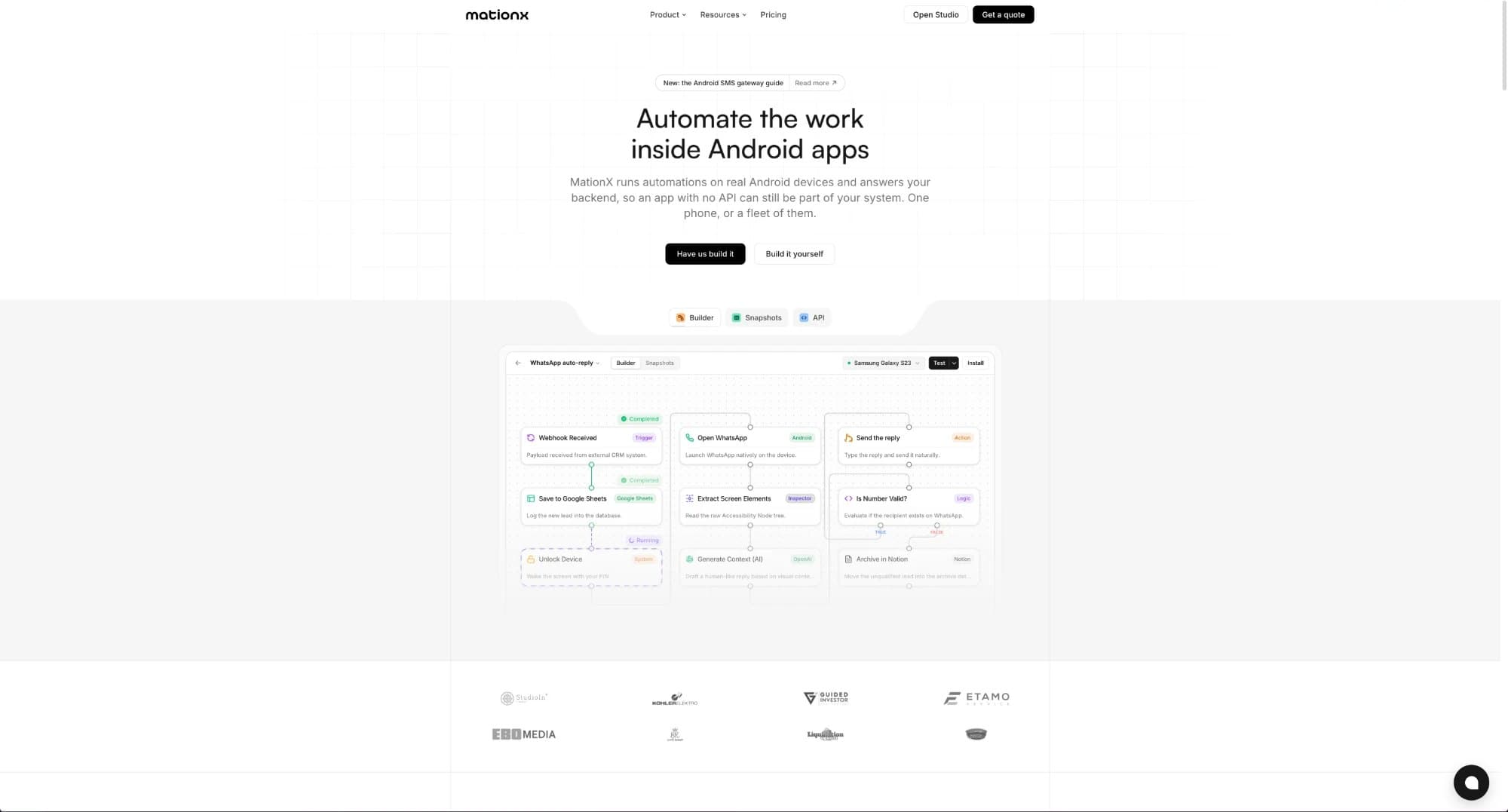
A paid SaaS where businesses build automations visually and run them on real Android phones, from one device to a whole fleet. I designed, built and operate all of it: web app, backend, realtime layer, billing and the Android runtime it compiles to.
- When
- Jan 2026 – now
- Role
- Founder · sole engineer
- Status
- In production
- 130+automation blocks
- ~111klines of TypeScript
- 55database models
- 47MCP tools for AI agents
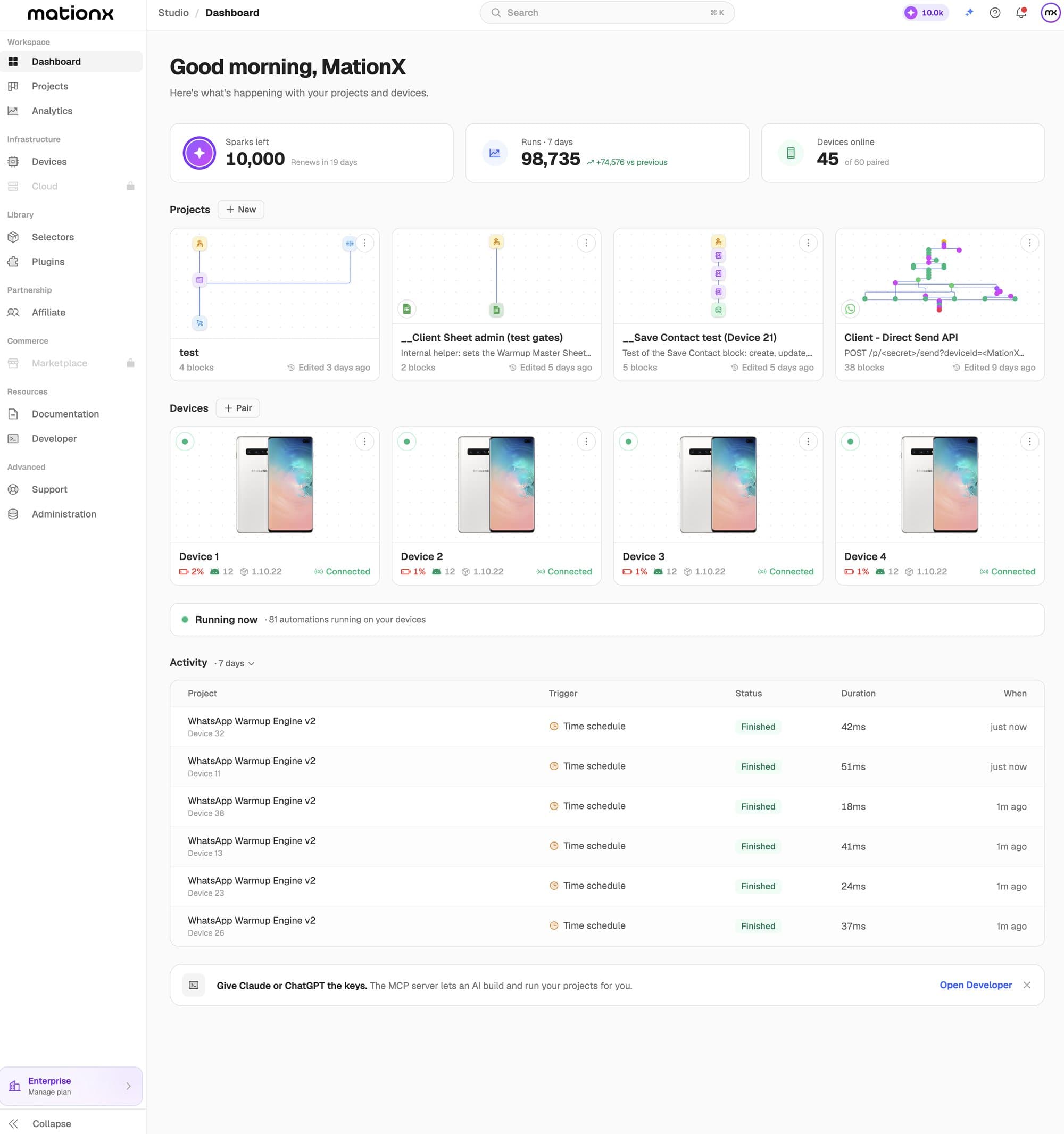
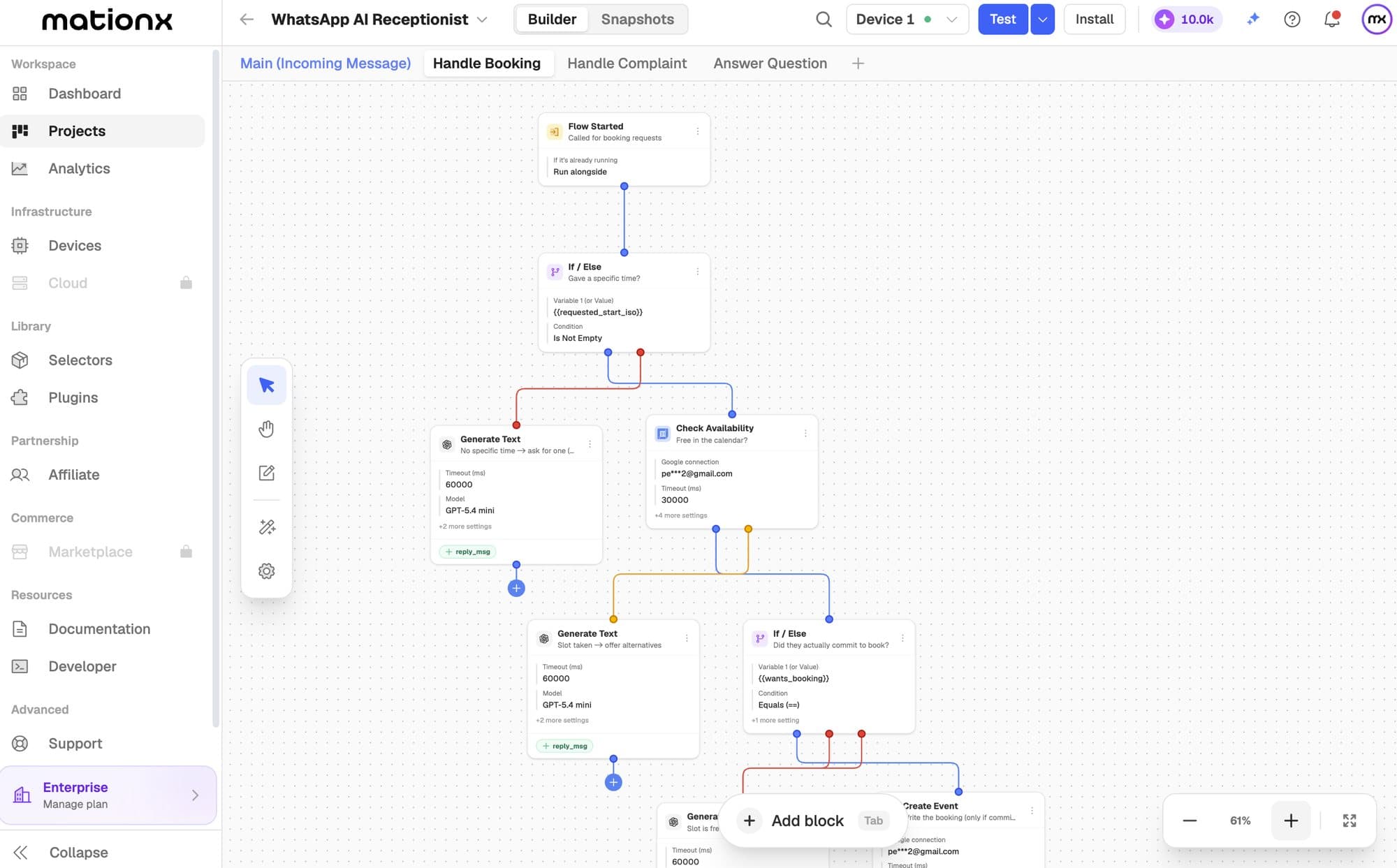
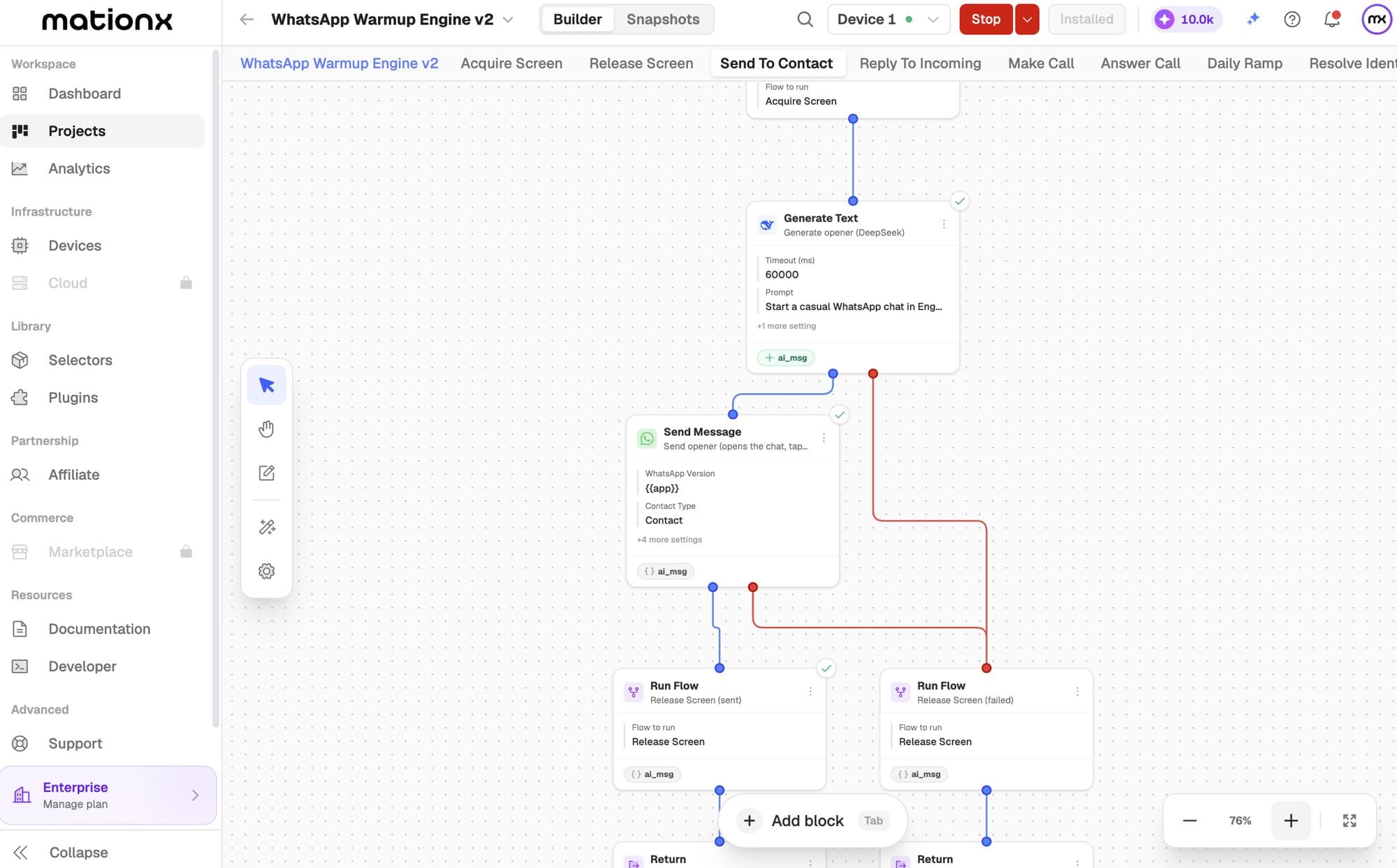
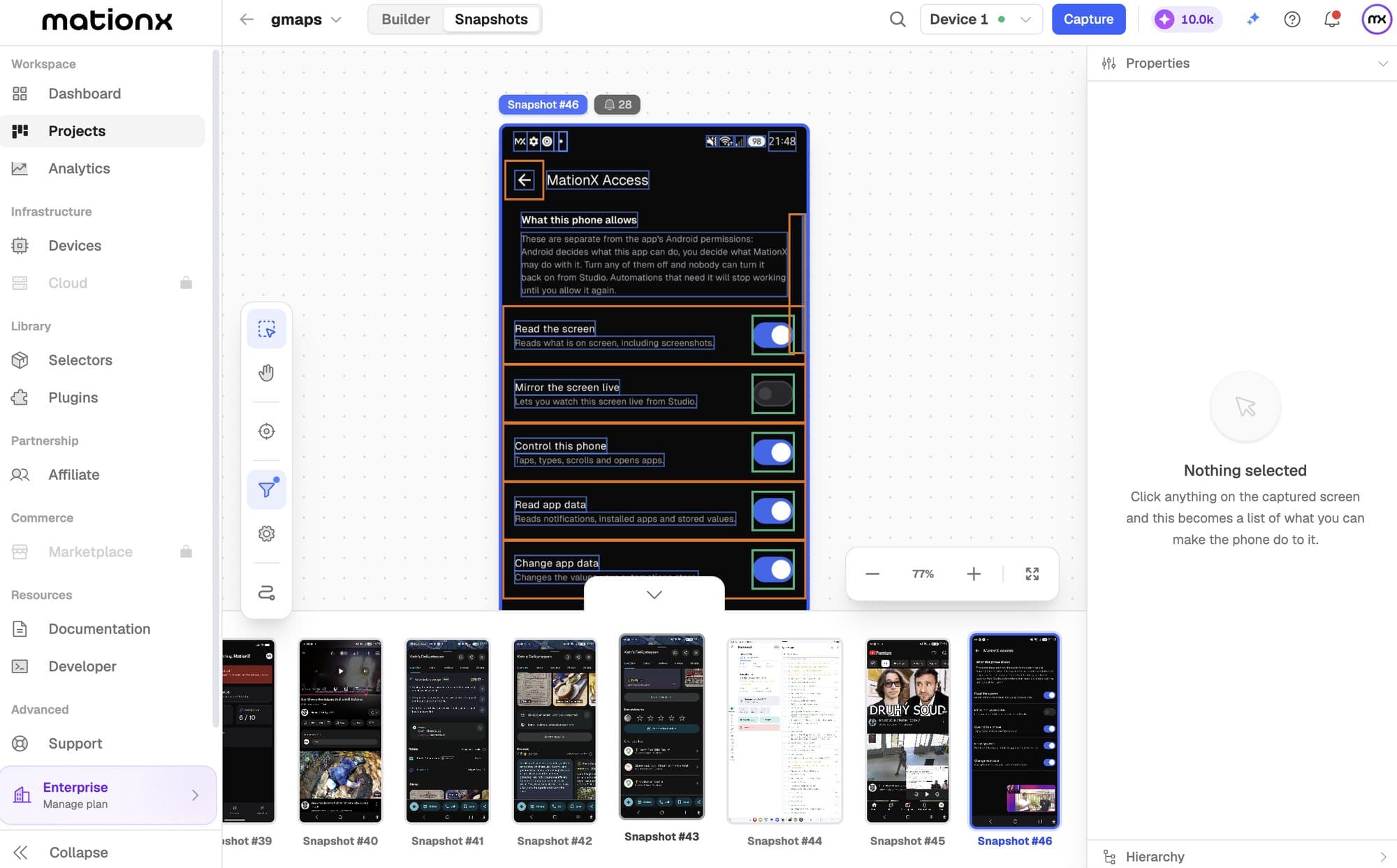
How it fits together
- 1Visual builder
- 2Sub-flow inliner
- 3AST compiler
- 4Encrypted per device
- 5Kotlin engine on phone
The problem
Plenty of business work lives inside Android apps that have no usable API: messaging, payments, marketplaces, internal tools. People do it by hand on phones, or hire someone to script it once and watch it break. MationX turns that work into automations that run on real devices, reliably, at fleet scale.
What I built
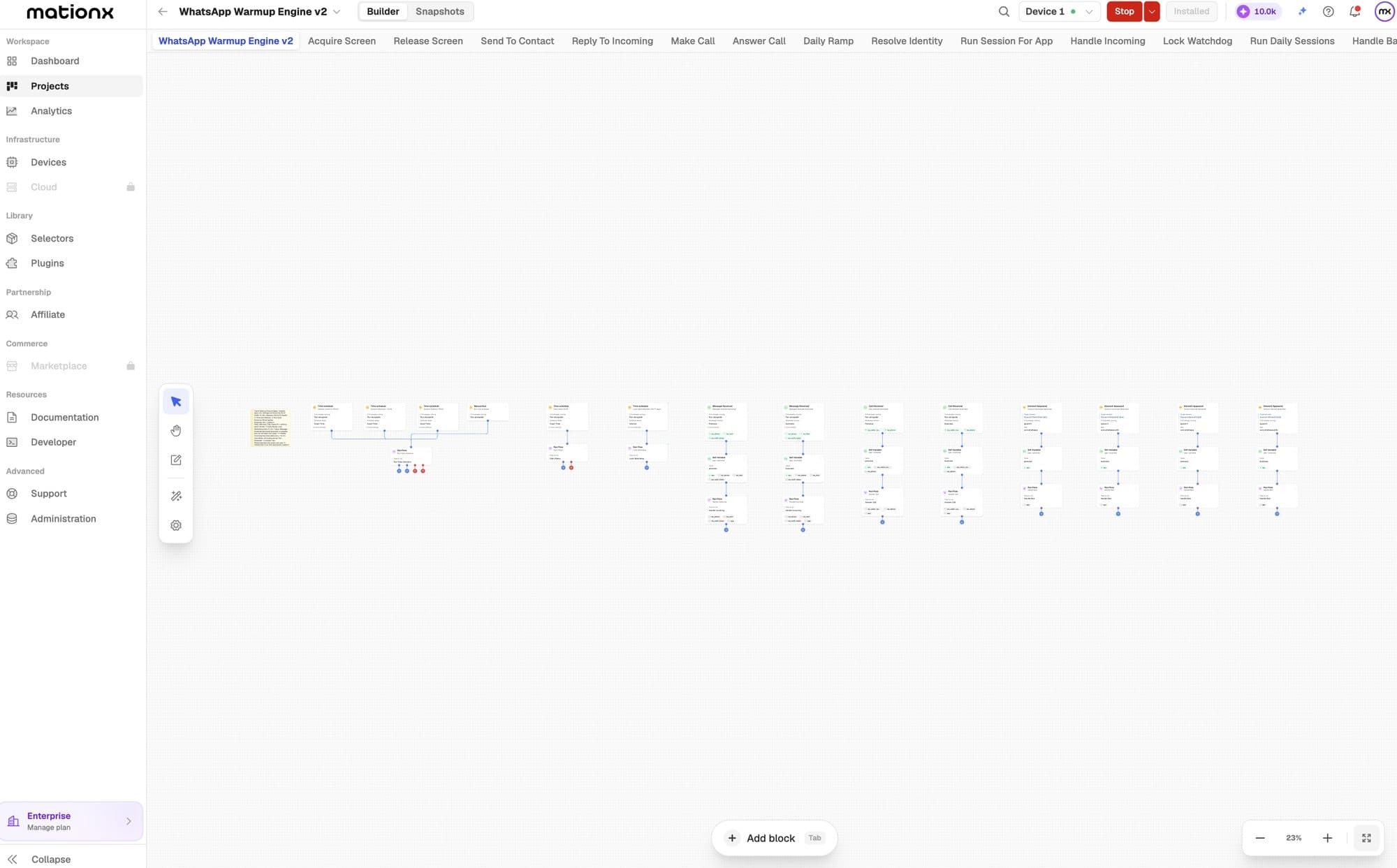
- A React Flow canvas with 117 actions, 15 triggers and 6 logic blocks: UI interaction, device control, data stores, HTTP, Google Sheets and Calendar, WhatsApp, and AI element finding.
- A compiler that inlines reusable sub-flows (with recursion guards) and emits a versioned AST the phone executes, checked against the user's plan and plugins.
- Device snapshots: the phone captures its screen and accessibility tree into a signed protobuf archive; the browser decodes it so users can pick robust selectors visually.
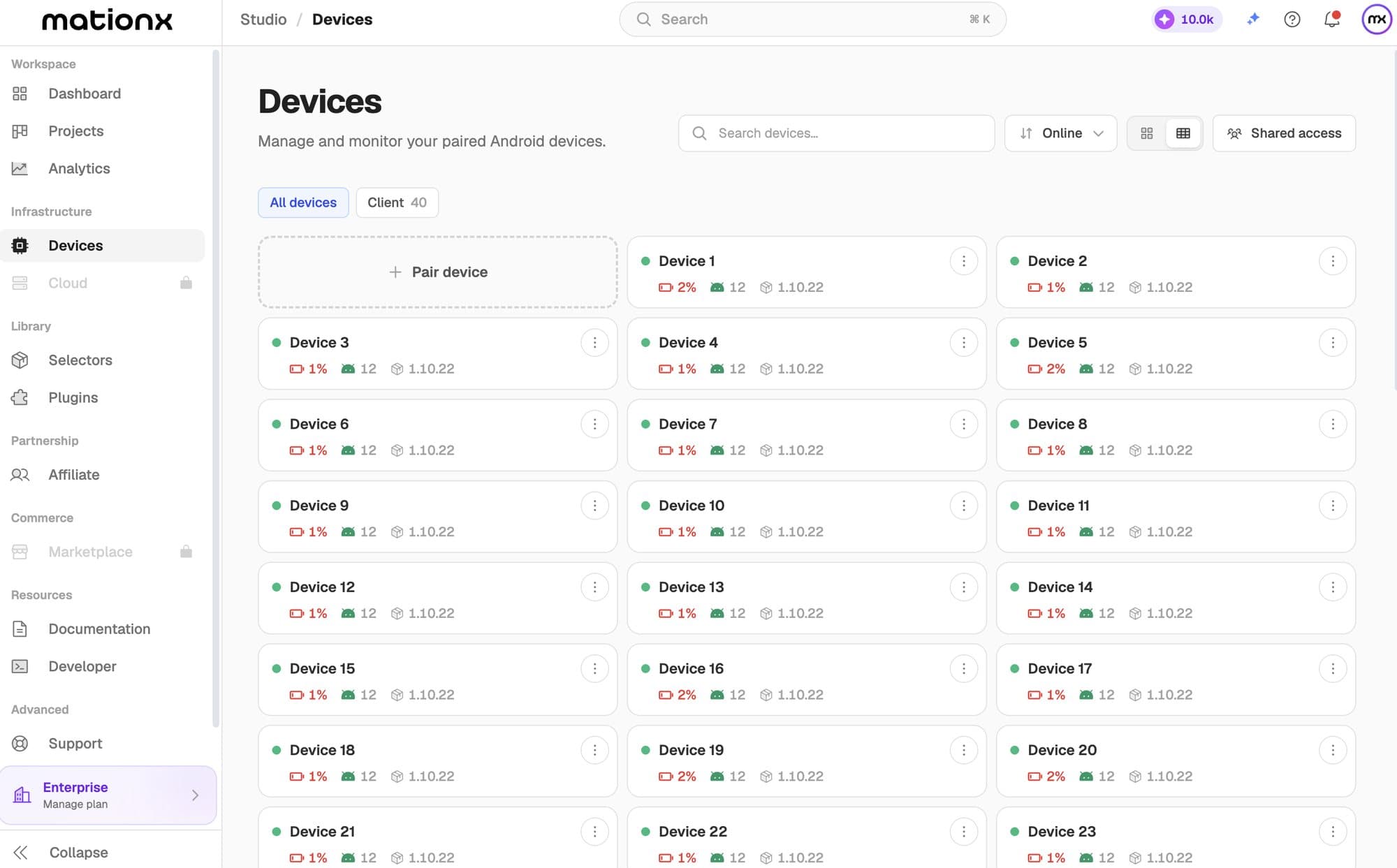
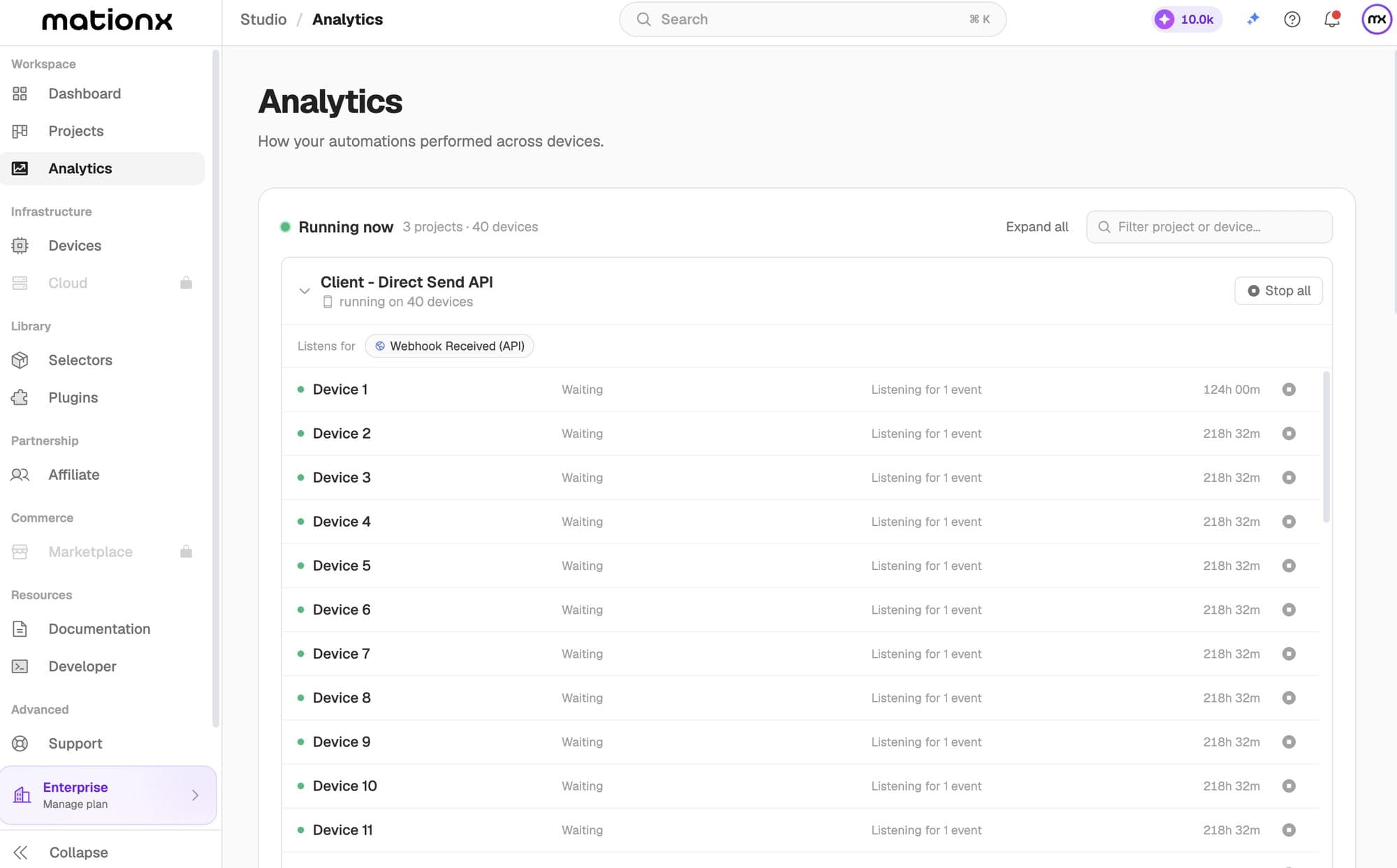
- Fleet management: QR/PIN pairing, device groups, shared access with manager/operator roles, plan-based device limits, remote wake, buzz and forced updates, with a command outbox that survives dropped connections.
- An AI layer: Max, an in-app agent that reads and edits projects, plus a public REST API and a remote MCP server (OAuth 2.1 with PKCE, hashed scoped API keys) so external agents like Claude can build and run automations.
- The business side: Stripe subscriptions, plan limits, an affiliate program with payouts, and an admin panel that hides revenue figures until a fresh passkey step-up.
Running it in production
- The realtime gateway runs as its own process behind a localhost bridge, so deploying the API never disconnects phones.
- Zero-downtime deploys: build into a separate directory, swap atomically, keep old static chunks for open tabs, rolling PM2 reloads, a deploy lock and a kept-back previous build for rollback.
- Optimistic concurrency on projects, so an AI edit can't be silently overwritten by a stale browser tab (and vice versa).
- Measured on production: the device list for 90 devices went from 3.4 MB to under 100 KB.
Stack
Next.js 16React 19Express 5PostgreSQLPrisma 7Socket.IOFCMWebRTCStripeMCP